


Garment Workers in Bangladesh, India, Pakistan and Sri Lanka
Written by Jerry Allen, Country Coordinator for Sri Lanka and Bangladesh
The Garment Workers campaign is launched after two years of Amnesty research work. Our Activist Led Campaign will focus on violations of workers’ right to freedom of association in the four target countries: Bangladesh, India, Pakistan and Sri Lanka and the steps that brands must take.
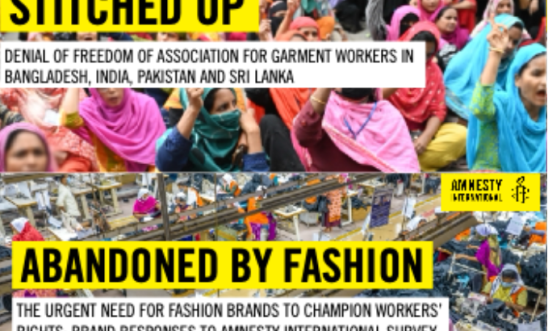
Two reports are now available:
1. Stitched Up: Denial of Freedom of Association for Garment Workers.
It examines the different ways in which workers are adversely affected by the restrictions on the right to freedom of association by states and by their employers.
2. Abandoned by Fashion: Examines the Urgent Need for Fashion Brands to Champion Workers’ Rights. I provides an insight into the policies, commitments and active promotion of the right to freedom of association and collective bargaining in key fashion brands and retailers’ supply chains. It identifies the steps that brands can take to promote the right to freedom of association, and, at the same time, help mitigate the endemic human rights abuses found throughout the industry, such as low wages, overwork, harassment and systemic gender discrimination and sexual violence.
Please see Abandoned by Fashion.
The research surveyed 21 brands, though only six fully responded. The UK is particularly important because we are the home of more of the brands than other countries.
Most of these workers are women. Harassment and discrimination are important aspects of this campaign. Caste and minority discrimination is also an important consideration. The informal out-sourcing of some manufacture to precarious suppliers will also be considered.
Join the fight for garment workers' rights
Garment workers in Bangladesh, India, Pakistan and Sri Lanka struggle daily to survive with sexual harassment, unpaid overtime, low wages, excessive targets, poor or no access to healthcare and other exploitative conditions to support their families. These abuses likely wouldn’t be ignored if they belonged to a union.
For years, governments and fashion companies have profited from the poor working conditions of the women who make our clothes. In Sri Lanka, some workers said their targets have increased by up to three times, meaning they don’t have time to go to the toilet, so they don’t drink water or use their lunch break, otherwise they wouldn’t meet their targets to get paid. In India, Mahir, a 40-year-old worker, must work 10-12 hours a day, six or seven days a week, to earn just enough to survive.
Garment workers want to improve their conditions but can only do so with a collective voice. When they try to form unions, they are threatened. When Sumaaiyaa in Pakistan tried to form a union to put an end to daily sexual harassment, she was forced to leave her job. In Bangladesh, Susmita, who worked in a garment factory as a child, was denied a promotion because she was a union member.
When workers raise their voices, they are ignored; when they try to organise, they are threatened and fired; and when workers protest, they are beaten, shot at and arrested. Attempts to unionise or demand better conditions are often met with threats, violence or dismissal.
Please do not include a suggestion of boycotting items from these countries in the campaign. These women and their families need this work.
This Activist Led Campaign needs support from UK activists. The UK is the home of more of the brands than other sections. Please contact Jerry Allen (jerry.allen@amnesty.org.uk) for more details.
About Amnesty UK Blogs
Our blogs are written by Amnesty International staff, volunteers and other interested individuals, to encourage debate around human rights issues. They do not necessarily represent the views of Amnesty International.
View latest posts
Our blogs are written by Amnesty International staff, volunteers and other interested individuals, to encourage debate around human rights issues. They do not necessarily represent the views of Amnesty International.
0 comments