


Tunisia: Opposition Activists Unjustly Jailed
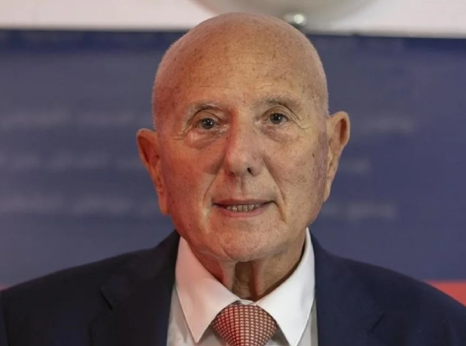
The ‘conspiracy case’ in Tunisia involves the prosecution of 37 opposition figures, lawyers, and activists on politically motivated charges, primarily “conspiracy against state security,” which carry severe prison sentence with them.
In April 2025, the Tunis Court of First Instance handed down harsh prison terms, ranging from four to 66 years, following a trial widely condemned for its grave fair trial violations, lack of transparency and executive interference. Defendants were not allowed to be present for their trial, based on the court’s decision to hold all terrorism trials remotely since April 2024, citing “imminent danger” without any justification. The trial was undermined by a lack of transparency and due process of law. Evidence was neither publicly presented nor subjected to cross-examination, and access to the courtroom was denied to several independent journalists, civil society representatives, and members of the diplomatic community. The defendants who were not allowed to attend in person, were not allowed to speak, and their lawyers were not given the opportunity to present their arguments before the court delivered its verdicts.
Those sentenced included political opposition activists from across the political spectrum, businessman, lawyers, human rights defenders and activists over two years after the investigation started in February 2023. The defendants were sentenced based on unfounded charges of conspiracy under 10 provisions of the Tunisian Penal Code including Article 72, which mandates the death penalty for trying to “change the nature of the state.” They were also sentenced on bogus terrorism related charges under the 2015 counterterrorism law including Article 32, which mandates up to 20 years of imprisonment for "forming a terrorist organization". The charges and evidence presented were based solely on the defendants’ involvement in organizing political opposition or meetings including with foreign nationals — none of which constitute a criminal offense.
Authorities had arbitrarily detained eight of the defendants in pre-trial detention since their arrest in February 2023 exceeding the legal limit of 14 months set out in the Code of Criminal Procedure: including politician Khayyam Turki, businessman Kamel Ltaeif; politician Abdelhamid Jelassi; opposition activist Issam Chebbi; opposition activist Jaouhar Ben; and lawyers and political activists Ghazi Chaouachi and Ridha Belhaj. Security forces arrested Chaima Issa and Lazhar Akremi in February 2023, but they were provisionally released on 13 July 2023 after nearly five months of arbitrary detention. Following their release, authorities banned them from travelling abroad and “appearing in public spaces”.
On 4 March 2025, the appeal trial opened, yet again without defendants being permitted to attend in court in violation of their fair trial rights. It was subsequently postponed to 11 and then 18 April. In advance, the court informed the Bar Association that all terrorism trials in March and April would proceed with detainees appearing remotely from prison, vaguely citing a “real danger” as justification. This measure was challenged by both the detainees and their legal teams, who asserted their right to appear in person. The detainees refused to participate in the proceedings unless physically present in the courtroom.
On 24 October 2025, defense lawyers learned that the initial appeals hearing had been scheduled for 27 October and would be held remotely via video conference for the 12 defendants in detention, in violation of their due process rights. The detained defendants were notified only on the day of the hearing, while the others received no summons. On 27 October, the hearing was adjourned until 17 November and then until 27 November.
On 24 April 2025, the UN High Commissioner for Human Rights, Volker Turk, called the verdict a setback to justice and the rule of law. Turk had previously expressed concerns over the arrests of political opposition figures in relation to conspiracy charges in February 2023 On 22 February 2023, President Saied declared that anyone who “dared to exonerate” what he described as “criminal networks” was, in essence, an “accomplice.” This statement, coupled with the president’s arbitrary dismissal of 57 judges in 2022, has contributed to a growing climate of intimidation of the judiciary. On 8 October 2024, the United Nations Working Group on Arbitrary Detention issued an opinion concluding that “the violations of the eight individuals’ right to due process and a fair trial are of such gravity as to render their detention arbitrary” and recommending their immediate release.