


Algeria: Activists & Poet Could Face Death Sentence
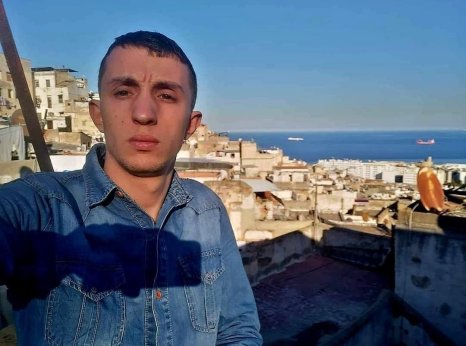
On 20 January 2025, the Rouiba tribunal of first instance in Algiers convicted activist Mohamed Tadjadit, 31, known as the "poet of the Hirak", under expedited trial proceedings that did not allow sufficient time for adequate defence, sentencing him to imprisonment for five years and a fine of DZD 200,000 (EUR 1,322). His conviction was based on content that he posted on Facebook and TikTok, including poetry, in which he criticized the Algerian government’s political and socio-economic policies, along with private digital communications with other activists. On 22 May 2025, the Court of Algiers upheld his conviction on appeal but reduced his sentence from five to one year in prison.
In another separate case for which he spent nine months in arbitrary pretrial detention between January and November 2024, on 11 November 2025, Mohamed Tadjadit faced trial again on his own. The Dar El Beïda tribunal of first instance sentenced him to five years in prison and a fine of DZD 200,000 (EUR 1,322) along with DZD 500,000 (EUR 3,305) in civil damages. The public prosecution accused him of “glorifying terrorism”, “using communication technologies to support terrorist organizations”, “inciting to unarmed gathering” and "offending public bodies" respectively under Articles 87bis 4, 87bis 12, 100 and 146 of the Penal Code. An appeal trial date is pending.
In a third separate case for which the first hearing is scheduled for 30 November 2025, Mohamed Tadjadit along with 12 other activists – including whistleblower and former members of the military Mohamed Benhlima and Mohamed Abdellah, as well as Hirak activists Malik Riahi, Noureddine Khimoud, Souheib Debbaghi Ahmed Tarek Debbaghi, Mustapha Guira and Sofiane Rebai – are accused of “conspiring to incite citizens against the authority of the state and to undermine national unity”, a criminal charge punishable by terms of imprisonment and by the death penalty under Articles 77 para 1, 78 and 79 of the Penal Code. They are also accused of “receiving funds to carry out actions undermining state security or stability and the normal functioning of state institutions, or national unity, or national territorial integrity, or the fundamental interests of Algeria, or security and public order, as part of a premeditated plan inside or outside the country”, "publishing content harmful to national interest" and “inciting to unarmed gathering”, respectively under Article 95bis, 95bis 1, 96 and 100 of the Penal Code that together carry penalties of at least 11 years’ imprisonment. Among the 12 co-defendants, two are held in pretrial detention and four are already detained in other separate cases. Two of them are in exile abroad. The others are free pending trial.
In these last two cases, charges are based on the defendants’ social media publications and private digital communications protected under the rights to freedom of expression and on their peaceful activism advocating for political reforms. The legal provisions used, despite stipulating heavy criminal penalties, lack legal clarity and notably rely on an overbroad definition of “terrorism” which includes “attempting to seize power or change the system of governance by unconstitutional means” and “undermining national unity”. Among the digital publications used to support the accusations in the conspiracy against the state case, the prosecution referred to a video shared by Mohamed Tadjadit and four co-defendants – other activists who in April 2021 exposed the testimony of a child tortured in police custody, for which the five of them have already been arbitrarily sentenced to 16 months in prison.
Since 2019, authorities have detained and prosecuted Mohamed Tadjadit in at least seven cases for his peaceful activism and expression of dissenting views. Mohamed Tadjadit is currently detained at El Harrach prison in Algiers.
Since the outbreak of the “Hirak” protests in 2019, demanding broad political reforms, the Algerian authorities have maintained a relentless crackdown on peaceful dissent by arresting, detaining and convicting activists, journalists, and critics expressing opposition to the government’s policies or other opinions critical of the authorities. The use of vague terrorism-related charges to prosecute peaceful protesters and critics of the government has become a common tool for suppressing the exercise of the rights to freedom of expression, peaceful assembly and association.
Algeria has not carried out any executions since 1993. The country, however, has previously sentenced dissidents to death in unfair trials and is yet to abolish the death penalty or sign and ratify the Second Optional Protocol to the International Covenant on Civil and Political Rights, aiming at the abolition of the death penalty. Amnesty International opposes the death penalty unconditionally, in any cases and under any circumstances.