


Press releases
Italy: Cutro shipwreck trial an opportunity to shine a light on government ‘failures and reckless decisions'
94 people, including 34 children, drowned in Italian waters in Cutro shipwreck
Italian government restricted response to maritime distress calls involving refugees and migrants
Trial starts tomorrow - Amnesty representatives will be present and spokespeople available on request
‘Those who drowned at Cutro could still be alive had authorities acted in line with their search and rescue obligations’ – Serena Chiodo
On 30 January, six Italian coastguard and customs officials will go on trial for failing to launch rescue operations which could have prevented a shipwreck that killed more than 90 people near the town of Cutro in southern Italy in February 2023.
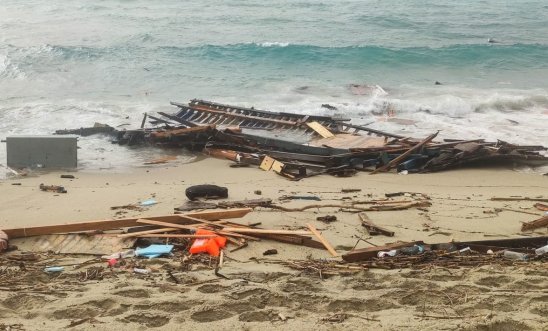
At least 94 people, including 34 children, drowned in Italian territorial waters near Steccato di Cutro, Calabria, as the “Summer Love” vessel sank just metres from the Italian shoreline. An unknown number of people also went missing at sea.
More than 50 survivors and relatives of victims will be civil parties in the proceedings, as well as numerous NGOs. Amnesty International will observe the hearing, with Serena Chiodo, Amnesty Italy’s Campaign specialist on migration, present at the Crotone courthouse.
Serena Chiodo, Amnesty Italy’s Campaign Specialist on Migration, said:
“This trial will try to establish any individual criminal responsibility for the deaths of dozens of people - including many children - which is fundamental to uphold the right of survivors and victims’ families to truth, justice and reparation.
“Crucially, it will also be an opportunity to shine a light on systemic failures and reckless decisions by the Italian authorities that may have contributed to the enormous loss of life.
“As recent days have once again shown, deadly shipwrecks in the Mediterranean are a brutal and ongoing reality. The Central Mediterranean continues to be one of the world’s most dangerous migration routes, exacerbated by European states’ failure to ensure adequate search and rescue operations and the ongoing crackdown on NGO rescue vessels by the Italian government.
“Those who drowned at Cutro could still be alive had authorities acted in line with their search and rescue obligations. Fewer people would be forced to make life-threatening journeys if European governments significantly increased access to safe and regular pathways for people fleeing desperate situations.”
In the aftermath of the Cutro shipwreck, according to leaked documents, it emerged in recent years that the Government had unduly restricted the response to maritime distress calls regarding refugees and migrants, which could have contributed to the disaster.
The trial comes amid a spate of deadly shipwrecks over the past week, with UN agencies estimating that hundreds of people may have drowned attempting to cross the Mediterranean.
Italian authorities could have prevented the disaster
Between 25 and 26 February 2023, a wooden boat carrying about 200 people sank metres from the shore in the Italian region of Calabria. Local fishermen volunteered in rescue efforts, but for many people on board it was already too late. Under international law, states are required to rescue people in distress at sea and ensure prompt coordination of rescue operations.
An investigation by Lighthouse Reports revealed information was available to Frontex and the Italian authorities several hours before the shipwreck which could have prevented drownings, including in relation to bad weather conditions and the likely presence of refugees and migrants below deck.
Amnesty highlighted shortcomings in relation to the authorities’ response to the incident and made recommendations for the Italian authorities in its calls for an urgent review of search and rescue procedures and visa policies.
On 24 January, the International Organization for Migration reported that the Central Mediterranean remains the deadliest migration route in the world, with at least 1,340 people losing their lives there last year alone.