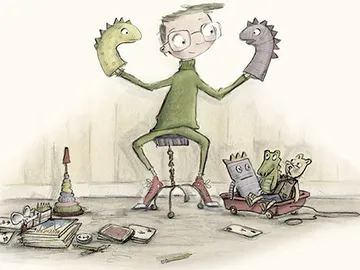
Teach human rights with fiction

© Marie-Anne Ventoura
Children’s books have the power to bring to life human rights that may otherwise seem abstract.
Exploring stories, poetry and non-fiction can encourage learning about, and celebrating, human rights. More than that, it can enable young readers and writers to enjoy their rights and practise being agents of change through critical thinking, expressing their voices and experience, trying on other perspectives, and taking action in their schools and communities.
“It is through literature, not simply literacy, that we learn to understand and empathise… Through literature, we can find our place in the world, feel we belong and discover our sense of responsibility. Amnesty understands this very well.”
Michael Morpurgo
Get started with nine ideas for exploring human rights through children’s books
1. Story Explorer
Download or order Amnesty's Story Explorer for free. This piece of classroom origami will help young people explore human rights themes in fiction with questions designed to promote discussion and critical thinking.
2. Draw human rights values
As Debi Gliori says, words are weaselly! This is especially true of big words like freedom or safety which mean different things to different people. Email [email protected] to order free values bookmarks. Invite students to choose one of the values – like ‘truth’ or ‘safety’ - and draw what it means to them.
3. ‘Tell me…’
Borrow from writer Aidan Chambers and encourage students to practise freedom of expression, thought and opinion. Start with the invitation ‘tell me…’ and then see where the conversation takes you.
4. Show and tell
Ask students to find and share objects that connect to human rights themes in the story they’re reading. This might be something they would take on a journey, connects them to their family, or celebrates their identity.
5. Rewrites
Invite students to take action for human rights in or on the fictional world. Ask them to rewrite or insert dialogue so that people are respected and celebrated. Suggest that they role play conversations in which people express themselves and feel heard. Invite them to choose a story that you have read or watched, select a supporting character and rewrite the story with them as the hero.
6. Share the impact
Consider the first book that changed your life. Where did you meet it? How did it impact on you? Why was it so important? Share this experience with your students and explore how it shaped your attitudes and behaviour.
7. Create a Poem
Encourage students to collect words from the book and turn them into a poem. You could also use activities from Words that Burn, Amnesty’s poetry and human rights project, to further explore relevant human rights themes and support the students to express themselves through poetry.
8. Dialogue rather than debate
Invite students to write down questions about a book or extract. Ask them to read their questions out loud and listen to each other without responding. Only start to discuss once everyone has shared their perspective.
9. Show solidarity
Ask students to write or draw a message of solidarity connected to the themes of the book. This could be for someone in their family or community, or an individual defending human rights.
For recommended reads and more ideas explore our books page.
10. Investigate! Educate! Advocate!
Ask students to take on the roles of an investigator, an educator and an advocate using this learning resource full of activities to accompany Amnesty's book These Rights are Your Rights. These exercises should provide an opportunity for your students to learn, understand and apply their rights so they are empowered and know they have a right to be safe and express themselves.

Looking for more?
The resources above are part of a wider collection created by our Human Rights Education team. For more inspiration and ideas, check out our Know Your Rights and Claim Them: Child Rights Education Toolkit, or explore our Knowledge Hub for more education resources on teaching human rights with fiction.
Alternatively, head back to our Education Themes page for even more curated teaching resources on a range of topics.

Join our TeachRights mailing list
Would you like to receive the latest news about our Human Rights Education work, along with free resources, information on training opportunities, and more straight to your inbox?
Related content
Find teaching resources and bring human rights into your classroom.
Learn about our Words That Burn programme