


Through the Human Rights Looking Glass: The UK’s Child Poverty Strategy?

Written by Jen Clark, Economic Social & Cultural Rights Lead at Amnesty UK
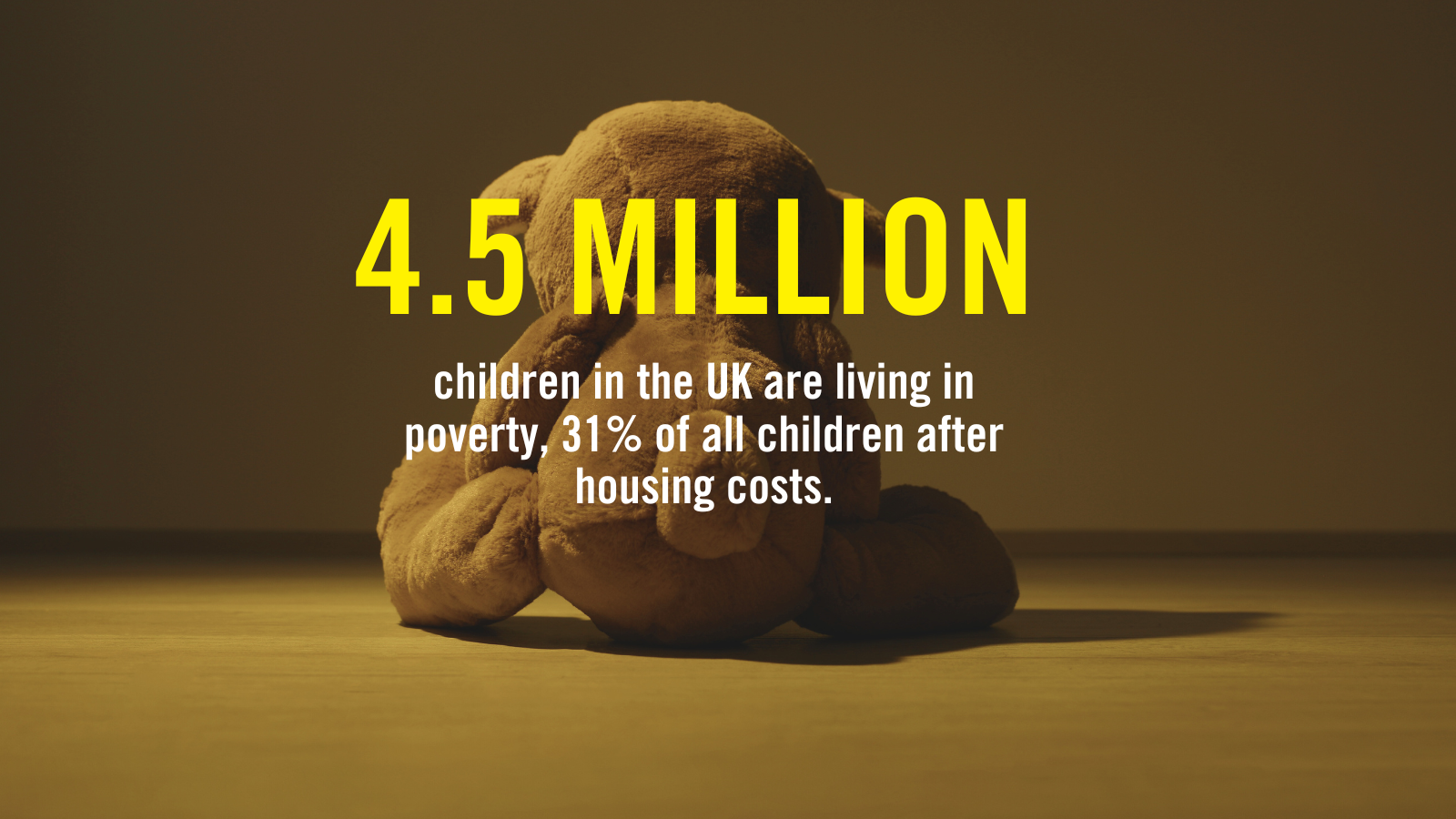
The UK Government’s Our Children, Our Future: Tackling Child Poverty lands at a time when 4.5 million children are living in poverty, 31% of all children after housing costs (AHC) (2023/24). The Government frames the strategy as the “first step” in a decade-long effort to “turn the tide.” It pledges to lift 550,000 children out of relative low income by the end of this parliament and to raise incomes for over 7 million children in households that gain from the measures. These are not trivial numbers, and some commitments most notably abolishing the two-child limit and expanding free school meals are meaningful. But judged against the UK’s binding human rights obligations under the International Covenant on Economic, Social and Cultural Rights (ICESCR), the strategy does not yet meet the test of a rights-based plan with clear targets, robust statutory requirements for monitoring, and accountability. It is progress to be welcomed but it falls short, and will sadly be leaving millions of children behind.
What’s in the strategy—and what would change?
The Government points to a package (much of which is not new) that promises to boost incomes, reduce the cost of essentials, and strengthens local support:
- Abolition of the two-child limit in Universal Credit and tax credits lifting 450,000 children out of relative low income within the parliament and raising incomes in households for 2 million children, including 600,000 in deep material poverty.
- Above inflation increases to the Universal Credit standard allowance over time, and a Fair Repayment Rate that caps overall deductions at 15% (down from 25%), worth an average £420/year to 1.2m households (including 700k families with children).
- Childcare expansion (30 hours from nine months) and school-based nurseries; free breakfast clubs; and an expansion of free school meals to all children in households on Universal Credit (from Sept 2026), with an estimated 100,000 children lifted out of relative low income by end of parliament.
- Housing and essentials: a £39bn 10year social and affordable homes programme in England; stronger renters’ rights (e.g., abolishing Section 21 evictions); retrofit via a Warm Homes Plan; an expanded Warm Home Discount; and steps to reduce school-day costs (uniform branding limits, second-hand access).
- Local support: a £1bn/year Crisis and Resilience Fund, Best Start Family Hubs, and a £500m Better Futures Fund to commission outcomes-based projects for vulnerable children and families.
These changes will help. Removing the two-child limit particularly aligns with rights principles ending a policy that broke the link between need and entitlement for larger families, most of whom are in work.
Where the strategy falls short on Human Rights
1) No clear, statutory poverty reduction targets or parliamentary accountability ❌
The strategy promises monitoring and annual reporting from Summer 2026, but does not set legally binding poverty reduction targets or require statutory reporting to Parliament. In rights terms, the Government must demonstrate progressive realisation with transparent milestones, credible baselines, and independent scrutiny. Absent binding targets, accountability risks becoming aspirational rather than enforceable.
2) The benefit cap remains untouched 👉
The strategy is silent on the benefit cap, which disproportionately harms single parent households and larger families precisely the cohorts identified as at highest risk. Keeping the cap while abolishing the two-child limit is incoherent: families can still be pushed below subsistence by an arbitrary ceiling that does not consider the real costs of basic essentials. A rights compliant approach requires aligning social security with the adequate standard of living principle and the best interests of the child.
3) Housing support and affordability: no commitment to unfreeze Local Housing Allowance 🏠
Housing costs are among the largest drivers of child poverty. The strategy invests in supply and tenant rights but does not commit to unfreezing Local Housing Allowance (LHA) nor to rebench marking it to actual local rents. For families in the private rented sector where a growing share of poor children live this omission means continuing shortfalls, arrears, and despite promises on temporary accommodation provision, there will be a pervasive risk of homelessness.
4) Punitive sanctions persist, undermining social security as a right 💷
The paper describes “transforming employment support” and improving Job centre culture but does not end or materially reform punitive sanctions for claimants of Universal Credit including cases where parents lose 100% of payments for months at a time. The most common reason for a sanction isn’t not being available for work, but missing a DWP appointment. This approach fails the proportionality test and does not consider the impact on children’s food, heat, and housing. A rights-based system would prioritise supportive conditionality, hardship protections, and child risk impact assessments before any sanction could be applied.
5) Child Maintenance Service (CMS): compulsory collection with fees deducted 📝
The Government plans a single service based on Collect and Pay, halving fees for receiving parents but keeping a 20% fee on nonresident parents who do not pay in full or on time (to drive compliance). In practice, compulsory collection introduces fees on maintenance flows for newly single parents. That is money meant for children. For low-income families, any deduction can be material. The rights-compatible solution would be zero fees for receiving parents, with the state absorbing administrative costs and focusing enforcement on nonpayment.
6) Debt advice without removing state-created debt drivers 🏛️
More debt advice helps, but the strategy leaves intact the five-week wait for Universal Credit (partial mitigations aside) and keeps sanction risks. When delays and deductions push families into crisis, debt advice treats symptoms, not causes. A rights-based system would prevent avoidable debt by paying UC sooner, simplifying deductions, and guaranteeing minimum income floors for households with children.
Measuring up to ICESCR: is this a rights-based strategy?
ICESCR requires the UK to progressively realise the right to an adequate standard of living, including adequate food, housing, and social security, and to use maximum available resources to protect children’s rights especially in times of economic stress. The Government’s paper acknowledges the moral and economic case for action and introduces a second metric deep material poverty to capture deprivation beyond income. That is a useful addition. But the plan still lacks:
- Explicit alignment with ICESCR obligations, including formal child rights impact assessments for major policies.
- Binding, time-bound poverty reduction targets, disaggregated for groups at higher risk (single parents, disabled families, larger families, ethnic minorities).
- Strong accountability mechanisms (statutory reporting to Parliament; independent evaluation; publication of data enabling civil society scrutiny).
In short, the strategy moves the dial, but falls short of a rights-first framework that would hardwire accountability, protect against punitive measures, and ensure adequacy of social security and housing support as entitlements, not discretionary relief.
Why scale matters: 550,000 vs. forgotten millions
The Government’s own figures show removing the two-child limit drives most of the 550,000 reduction 450,000 children with free school meals and other measures contributing tens of thousands more. That leaves millions still in poverty. When nearly three quarters of poor children live in working families, fiddling at the edges will not suffice. Without LHA reform, benefit cap removal, sanctions reform, and minimum income guarantees for households with children, the UK will not meet its obligations or public expectations.
The bottom line—and what must change next
Reducing child poverty, and poverty more widely, should be this Government’s number one priority… Unfortunately, this long awaited strategy doesn’t look as if it will meet the moment… There are clear holes… from the benefit cap, to rising housing costs, or the harsh sanctions on parents for missing appointments that ultimately brutally impact their children. Poverty is a political choice… it must drastically rethink the prioritisation it gives to poverty reduction.
To realise children’s economic, social and cultural rights, the Government should:
- Legislate statutory child poverty targets with annual parliamentary reporting and independent evaluation.
- Remove the benefit cap and unfreeze LHA to match real local rents.
- Reform sanctions to prevent full benefit loss, embed hardship protections, and require child risk impact assessments before any sanction is applied.
- Eliminate CMS fees for receiving parents, absorb administrative costs, and strengthen enforcement against nonpayment.
- End the five week wait for Universal Credit and guarantee social protection floors for families with children otherwise known as an Essentials Guarantee.
- Embed ICESCR and the Convention on the Rights of the Child explicitly across the strategy, with rights-based impact assessments and disaggregated metrics.
This strategy takes important steps, and abolishing the two-child limit is historic. But if the UK wants a legacy of children thriving not skipping meals or shivering through winters in dark unsuitable homes, then the government must be bolder, rights-led, and accountable. Millions more childhoods depend on it.
Our blogs are written by Amnesty International staff, volunteers and other interested individuals, to encourage debate around human rights issues. They do not necessarily represent the views of Amnesty International.
0 comments