

How a Governments Budget Affect Human Rights
Written by Jen Clark, Economic Social & Cultural Rights Lead at Amnesty UK
Ever wondered what a government budget really says about its priorities? Spoiler alert- it’s not just about pounds and pence or even ‘Growth, Growth, Growth’ it’s dictates a large part of whether your basic rights are protected or undermined.
I’m determined to go further and faster to kickstart economic growth.
That means generating investment, driving reform and boosting trade.
I will fight every day to deliver that growth and put more money into working people’s pockets.
— Rachel Reeves (@RachelReevesMP) January 16, 2025
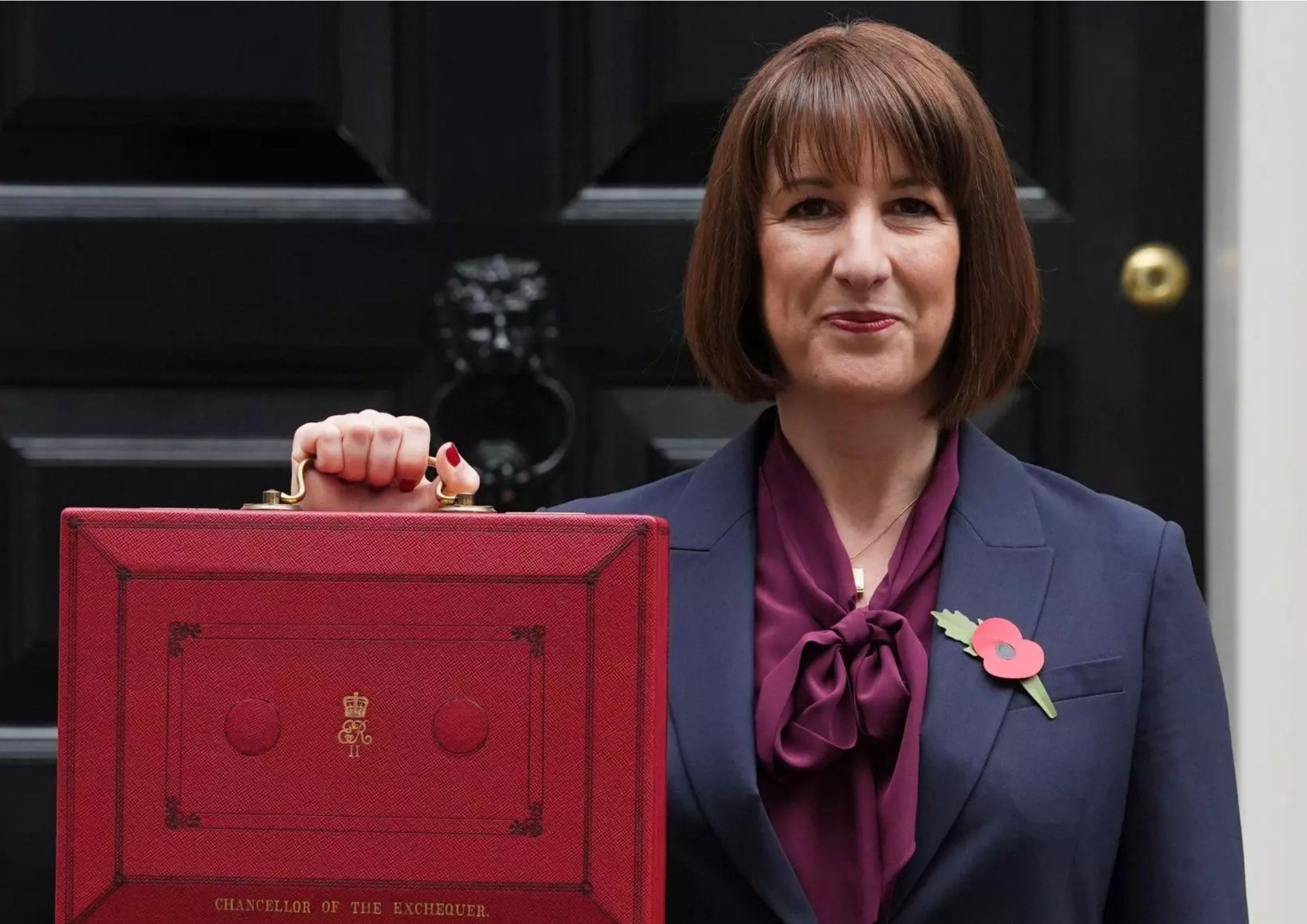
When the Chancellor stands up to announce the Budget with their red box, most of us hear headlines about taxes, spending cuts, or economic forecasts. But behind those numbers are decisions that shape our daily lives. Do hospitals have enough staff to prevent early deaths? Can schools afford books or classroom assistants so all children can learn? Can families keep a roof over their heads or feed their children?
In short, budgets decide whether our human rights like health, housing, food, education, and social security are fulfilled and respected.
It all adds up to Human Rights: The Hidden Connection
Under international law, the UK has promised to uphold economic, social, and cultural rights. These include the right to an adequate standard of living, healthcare, education, and social security. But here’s the catch: unlike civil and political rights, these aren’t fully protected in UK law. That means when the government makes budget decisions that undermine these rights, that force more people into poverty, there’s no easy way to challenge them in court.
Think about it. If funding for social housing isn’t enough, families may end up trapped in homelessness. If social security don’t keep pace with inflation, people can’t afford food or heating. These aren’t just policy choices they’re human rights issues.
The Problem: Gaps That Leave People Behind
If we ask ourselves how we measure success of a government budget, surely the answer can’t only be increase in GDP, tackling inflation and stable markets. It must also be tackling soaring poverty, homelessness and widening income inequality. Here in the UK, we are the 6th richest country but 24% of people live in poverty and more than 1 in 3 children are experiencing poverty. So what’s going wrong? Amnesty International’s briefings published in the wake of the Autumn Budget 2025, shows serious gaps in how the UK approaches budgets that limit our rights:
- No legal safeguards: Economic, social, and cultural rights aren’t embedded in UK law, so budgets aren’t assessed against these obligations.
- Lack of transparency and participation: Budget decisions often happen behind closed doors, with little input from the people most affected.
- Spending cuts and unfair taxes: Austerity measures and regressive tax policies hit the poorest hardest, deepening inequality.
- Data gaps: There’s not enough monitoring of who benefits from spending or who’s left out.
Learn more about the briefings
Why This Matters Now
Right now, every pound counts. The cost-of-living crisis has pushed millions into hardship. Inflation means essentials cost more, but benefits and wages haven’t kept up. Meanwhile, government spending on social security and housing remains inadequate and billions are wasted on flawed digital systems instead of fixing real problems.
Budgets should be a tool for fairness. Instead, they often widen the gap between rich and poor. And when rights aren’t built into the process, the people who need help most lose out.
What Does a Rights-Friendly Budget Look Like?
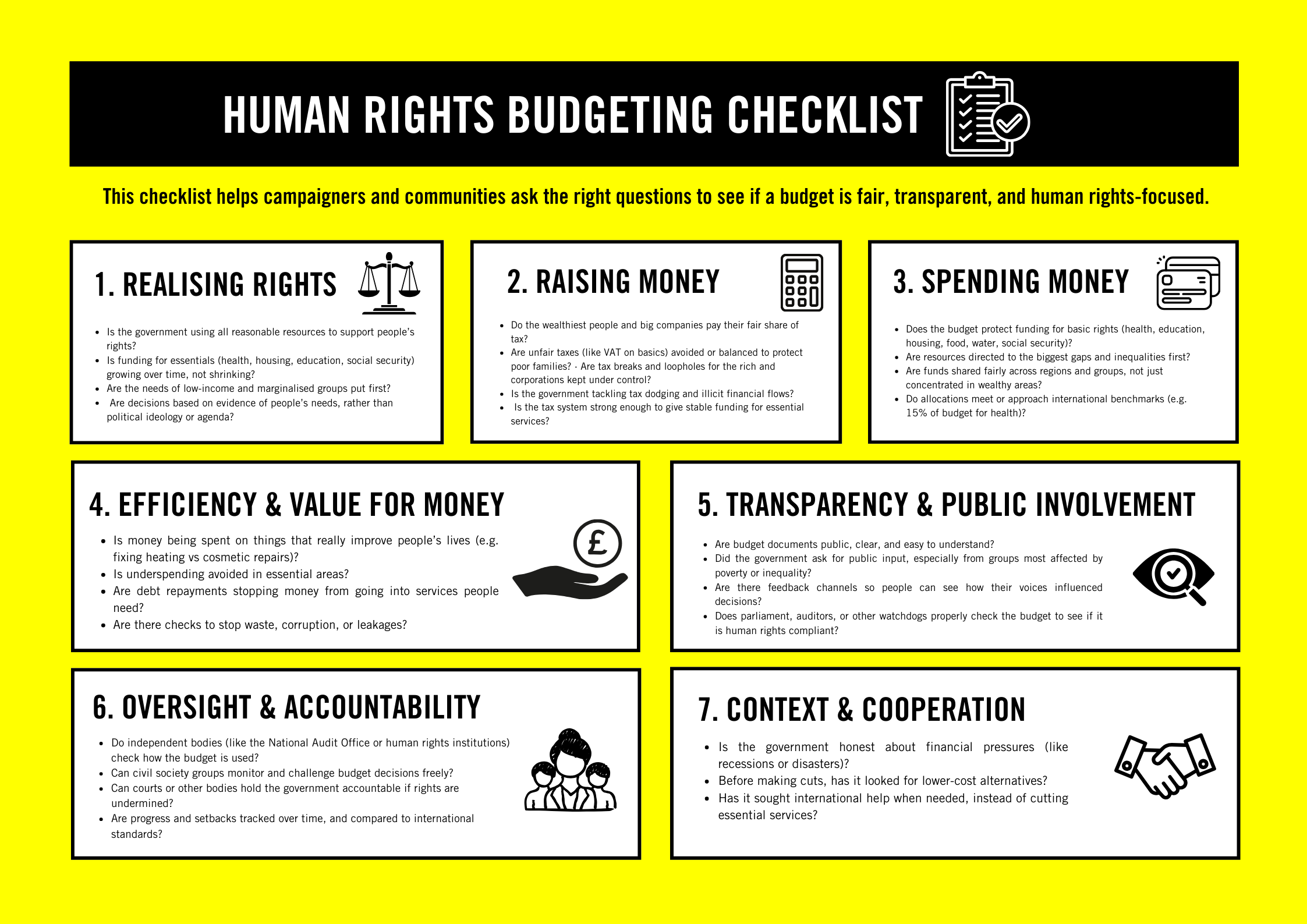
Here’s the good news: there’s a clear checklist for what a fair, human rights–focused budget should include that can help the Chancellor and those holding her to account to measure themselves against their international obligations:
Are budgets protecting people’s basic rights?
- Is the government funding essentials like healthcare, housing, education, and social security fairly, especially for low-income and marginalised groups?
- Is the money raised fairly? Are taxes and revenue policies ensuring that the wealthiest pay their share and that public funds are stable, without burdening the poorest?
- Is spending targeted and effective? Are resources allocated to the areas of greatest need, spent efficiently, and free from waste or corruption?
- Can the public see and influence budget decisions? Are budgets transparent, understandable, and shaped by input from communities, especially those most affected by poverty?
- Is there oversight and accountability? Are independent bodies monitoring the budget, tracking progress, and holding the government accountable for decisions that affect human rights?
Budgets should also include human rights impact assessments before big decisions are made. That means asking: will this policy hurt vulnerable groups? Are there better alternatives? Right now, that rarely happens.
Real-Life Examples: Why Choices Matter
When all of us ordinary people have to balance our books, we make difficult choices based on where the money will be best spent to meet our essentials first. We prioritise based on choices. Governments sometimes prioritise the wrong things at the expense of our rights.
In Northern Ireland, a £7 million cladding project was approved for social housing blocks. Sounds good, right? But residents were living in damp, freezing flats. A rights-based budget analysis showed that replacing heating systems would cost just 28% of the cladding budget and actually improve people’s lives. After pressure from campaigners, the plans were changed. That’s the power of putting rights at the heart of spending.
Billions have been spent on digital systems automating Universal Credit, but errors and sanctions have left people destitute. Meanwhile, there’s no robust monitoring of digital exclusion. A rights-friendly approach would ensure non-digital alternatives and proper oversight of algorithms.
Why Should You Care?
Because budgets affect everything from the hospital you rely on, to the school your kids attend to whether your neighbour can afford heating this winter. Budgets are not abstract they’re about our dignity, equality, and fairness.
You will not be surprised to hear that governments don’t always get it right. Without public scrutiny, budgets can entrench inequality instead of reducing it. That’s why we need transparency, participation, and accountability built into every stage of the budget cycle at every level of government.
What Can We Do?
- Ask questions: Where is the money going? Who benefits? Who’s left behind?
- Demand transparency: Budget documents should be public, clear, and easy to understand.
- Push for participation: People most affected by poverty and inequality should have a voice in decisions.
- Support rights-based budgeting: Advocate for laws and policies that embed human rights into fiscal planning.
Budgets aren’t just numbers on a spreadsheet. They’re a reflection of our values as a country and a test of whether governments take their human rights obligations seriously. Let’s make sure they do.
Human Rights Budgeting Checklist
Budgets show whether a government is serious about protecting people’s basic human rights (like healthcare, housing, education, and social security). This checklist helps campaigners and communities ask the right questions to see if a budget is fair, transparent, and human rights focused.
Our blogs are written by Amnesty International staff, volunteers and other interested individuals, to encourage debate around human rights issues. They do not necessarily represent the views of Amnesty International.
0 comments