Driven into Darkness: How TikTok’s ‘For You’ Feed Encourages Self-Harm and Suicidal Ideation

Overview
This report, produced by Amnesty's International Secretariat, explores how TikTok’s design and content targeting systems affect children and young people’s mental health and wellbeing. Drawing on Amnesty International’s research, it examines how the platform’s highly personalised ‘For You’ feed can rapidly direct users who express an interest in mental health towards repeated streams of potentially harmful content.
The findings show that children and young people can be drawn into “rabbit holes” of videos that romanticise or encourage depressive thinking, self‑harm and suicide. In the context of growing evidence about the health risks associated with compulsive social media use, this report highlights how TikTok’s platform design risks exacerbating experiences of depression, anxiety and self‑harm.
Amnesty International’s research raises serious concerns about the impact of these systems on children and young people’s mental and physical health, and the extent to which TikTok is meeting its responsibility to respect their rights.
Resource details
Publication date
Resource type
Download
Summary
During the Covid-19 pandemic, TikTok emerged as a global platform, attracting hundreds of millions of children and young people largely thanks to its ‘For You’ page, an infinitely scrollable feed of personalized video suggestions, and the algorithmic recommender system behind it.
Through its seamless hyper-personalization, TikTok has created an addictive platform, despite mounting evidence of the serious health risks associated with children’s compulsive use of social media. Examining further risks of TikTok’s content targeting, Amnesty International’s research shows that TikTok’s ‘For You’ feed can easily draw children and young people who signal an interest in mental health into “rabbit holes” of potentially harmful content, including videos that romanticize and encourage depressive thinking, self-harm and suicide. TikTok risks exacerbating children and young people’s struggles with depression, anxiety and self-harm, putting young people’s mental and physical health at risk.
TikTok must urgently overhaul its data collection and amplification processes and undertake comprehensive human rights due diligence. However, individual actions by a single company are not sufficient to rein in a business model that is fundamentally incompatible with human rights. States must regulate “Big Tech” companies in line with international human rights law and standards to protect and fulfil children and young people’s rights.
Download and read the full report via the link above.

Join our Rights In Focus mailing list
Would you like to receive the latest Rights in Focus updates including new research, thought-provoking articles, upcoming events and more straight to your inbox?
-
 Amnesty International UK Submission to the UK Consultation 'Growing up in the Online World: a National Conversation' (2026)
Amnesty International UK submission exploring social media risks for children and young people, and calling for ‘safety by design’ regulation to protect rights without limiting access.
Submission 26 May 2026 -
 Dragged into the rabbit hole: New evidence of TikTok’s risks to children’s mental health
This follow-up report, presents new evidence that TikTok’s ‘For You’ feed continues to push children and young people engaging with mental health content towards depressive, self‑harm and suicide‑related material.
Reports and publications 20 Oct 2025 -
 “I Feel Exposed”: Caught in TikTok’s Surveillance Web
This report explores how TikTok’s highly personalised ‘For You’ feed, used by millions of children and young people worldwide, is driven by a surveillance‑based business model that puts children’s rights at risk.
Reports and publications 07 Nov 2023


Related content

Amnesty defends children’s rights in the UK and globally, empowering young people to lead change through our Children’s Human Rights Network - campaigning, educating and amplifying youth voices for justice.
Technology is creating new ways to abuse human rights, from discrimination to spying on citizens. We work to make sure technology protects human rights.
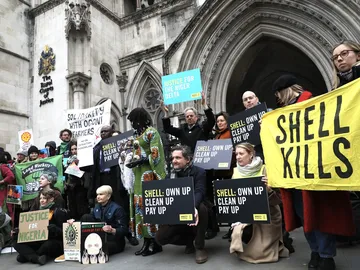
This collection brings together resources examining corporate impacts on human rights and our work to hold companies to account.