Death penalty report 2015

Overview
A global look at the state of the death penalty in 2015 - its use, legal issues, regional differences, resumed practices, and continued momentum toward abolition.
Resource details
Publication date
Resource type
Download
Summary
2015 was marked by two opposing trends in relation to the death penalty. On the one hand, four countries abolished the death penalty, moving the world ever closer to complete abolition. On the other hand, the number of executions recorded by Amnesty International increased significantly compared to 2014. The organization logged at least 1,634 executions, the majority of which took place in just three countries: Iran, Pakistan and Saudi Arabia.
As in previous years, this review does not include figures for China, where data on the use of the death penalty is classified as a state secret.
The number of executions recorded in the Middle East and North Africa rose from at least 945 in 2014 to at least 1,196 in 2015, an increase of 26%.
While no executions were recorded in Europe and Central Asia, Belarus imposed at least two new death sentences.
Although the USA remained the only country in the Americas to carry out executions, numbers continued to decline. Six US states carried out executions, one less than in 2014. Pennsylvania imposed an official moratorium on executions in February.
In Asia-Pacific, Indonesia resumed executions. More than 300 people were executed in Pakistan. The Parliament of Mongolia adopted a new Criminal Code removing the death penalty from national legislation.
The trend towards abolition of the death penalty in sub-Saharan Africa continued: the Republic of Congo and Madagascar abolished the death penalty, and fewer death sentences and executions were recorded in the region compared to 2014.
Amnesty International opposes the death penalty in all cases without exception, regardless of the nature or the circumstances of the crime; guilt, innocence or other characteristics of the individual; or the method used by the state to carry out the execution.
-
 Death penalty report 2016
A global look at the state of the death penalty in 2016 - its use, legal issues, regional differences, resumed practices, and continued momentum toward abolition.
Reports and publications 10 Apr 2017 -
 Death penalty report 2014
Amnesty International's death penalty report for 2014
Reports and publications 31 Mar 2015


Related content
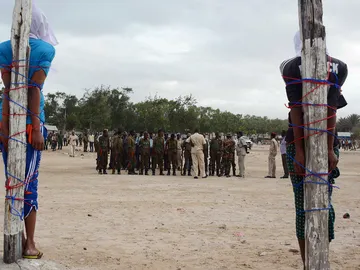
Executions in a single year spiked to highest recorded for 25 years, as more countries used the death penalty to ruthlessly execute citizens.
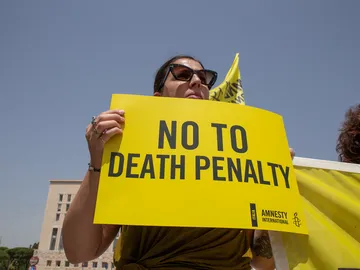
We stand against anyone - including any government - having the right to take away someone else’s life. We won’t stop until every country has abolished it. Explore our work to end the use of the death penalty around the world.
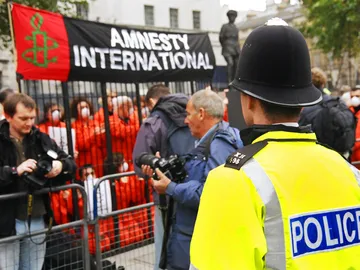
Ordinary individuals around the world are facing imprisonment, torture, and even death just for their beliefs, their job, who they love and even who they are. Find out how you can help us fight for their freedom.