Latest
Latest news, commentary, and analysis from Amnesty International UK.
Showing 1762 articles
-
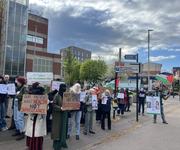 UK: Amnesty backs MPs' call to terminate NHS England's contract with Palantir – and demands Government must act now
Amnesty responds to the cross-party House of Commons Science, Innovation and Technology Committee concluding the government should terminate NHS England's contract with Palantir, citing the company "supporting highly controversial policies and activities".
03 Jun 2026 Press release -
 Statement on political commentary after the tragic murder of Henry Nowak
Amnesty International UK's response to the political commentary that has followed the tragic murder of Henry Nowak
02 Jun 2026 Press release -
 Northern Ireland: Martin O'Hagan Family 'fobbed off' as police ombudsman blocks publication of murder report
Amnesty International reacts to the police ombudsman blocking the report into the murder investigation of journalist Martin O'Hagan.
01 Jun 2026 Press release -
 Children are being monitored and indoctrinated in Russian classrooms – new report
Amnesty International's new report finds that children across Russia and Russian-occupied Ukraine are being indoctrinated by propaganda-filled textbooks and lectures set out in a centrally controlled curriculum. At the same time, teachers are being instructed to monitor their students online and report dissenting views to the authorities.
01 Jun 2026 -
 Gulf states arrest over 1,000 and strip citizenship for online war posts to 'protect their glossy image'
Amnesty International responds to Gulf state authorities having arrested more than 1,000 people in a sweeping crackdown on freedom of expression linked to the US-Israeli war.
01 Jun 2026 -
 UK: Milburn review has to be ‘wake-up call’ to stop young people falling into poverty
Our response to The Milburn Review’s interim findings on youth unemployment in the UK.
28 May 2026 Press release -
 Tortured, disappeared, executed: How Iran is using war as a shield for systematic repression
Since the unlawful military attack launched by the USA and Israel against Iran on 28 February 2026, Iranian authorities have arbitrarily arrested more than 6,000 people
28 May 2026 Press release -
 Powerful exhibit in London documents Myanmar military’s attempt to crush a protest movement
Powerful exhibit in London documents Myanmar military’s attempt to crush a protest movement
21 May 2026 Press release -
 UK: Council of Europe's political declaration on the ECHR "weakens protections for refugees and migrants"
Amnesty International statement on the Council of Europe's political declaration on the ECHR
21 May 2026 Press release -
 UK: Unite the Kingdom rally "brings racism, violence and fear to the streets of London"
Amnesty International statement on Unite the Kingdom rally
21 May 2026 Press release -
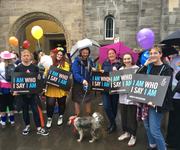 Anti trans organisations exerting powerful influence over media and politics, new analysis reveals
Amnesty’s analysis exposes scale of anti-trans influence in UK media and maps rapid rise of anti-trans organisations
21 May 2026 Press release -
 Scotland: Political leaders must reject division and focus on delivering human rights
In the wake of the 2026 Scottish Parliament election, we call on party leaders to champion human rights for all to combat divisive rhetoric in Scotland.
20 May 2026 Press release -
 Northern Ireland: Racist hate crimes at record high, new PSNI figures show
Racist violence is “spiralling out of control” in Northern Ireland after new police figures revealed record levels of racist hate crime.
15 May 2026 Press release -
 UK: Spy case exposes Hong Kong Government’s ‘chilling determination’ to intimidate and harass Hongkongers living in Britain
Amnesty responds to the Old Bailey today finding Chung Biu ‘Bill’ Yuen, a manager in the Hong Kong Economic and Trade Office in London and former Hong Kong superintendent, and former UK Border Force officer and City of London Police volunteer Special Constable Chi Leung ‘Peter’ Wai, guilty of spying on Hong Kong activists in the UK
07 May 2026 -
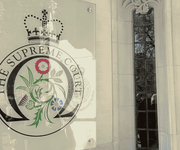 UK: Supreme Court judgment a ‘bitter blow to victims’
Amnesty International has today expressed grave concerns at a judgment by the UK Supreme Court allowing the UK government’s appeal in a major case on the legacy of the Northern Ireland conflict, warning it represents a profound setback for victims, truth and the rule of law.
07 May 2026 -
 Amnesty Media Awards 2026: Winners Announced
Amnesty's annual Media Awards, which are now in their 34th year, highlight excellence in human rights journalism
06 May 2026 Press release -
 Northern Ireland: World Press Freedom Day – release report into Martin O’Hagan’s murder
Ahead of World Press Freedom Day (3 May), Amnesty International and Fintan and Desmond O’Hagan - the brothers of murdered journalist Martin O’Hagan - are calling on the Police Ombudsman for Northern Ireland to release its long-delayed report into the investigation of his brutal murder.
01 May 2026 Press release -
 Israel's interception of the Global Sumud Flotilla bound for Gaza sparks 'grave concerns' for 175 detained activists
It is appalling that activists participating in a peaceful solidarity mission to break Israel's unlawful blockade have been arbitrarily detained once again
30 Apr 2026 Press release -
 Middle East: World leaders must ‘draw a red line’ and secure a lasting ceasefire
Fragile ceasefires leave civilians across the Middle East deeply vulnerable
29 Apr 2026 Press release -
 UK: Government appeal should be withdrawn on Palestine Action ban
Amnesty is intervening in this case because the Palestine Action ban was a grave misuse by the government of sweeping counter terror powers
28 Apr 2026 Press release


