Latest
Latest news, commentary, and analysis from Amnesty International UK.
Showing 1769 articles
-
 Northern Ireland: Racist violence in Belfast a 'disgrace' stoked from afar
Responding to the racist violence that took place in Belfast last night, Patrick Corrigan, Northern Ireland Programme Director at Amnesty International UK, said: “This was racist violence on a shocking scale. It did not emerge in a vacuum. The flames that burned last night were fuelled by those who sought to blame entire communities for the actions of an individual"
10 Jun 2026 Press release -
 Erasing anything Palestinian: Israel’s ethnic cleansing campaign in the West Bank demands global action – new report
Ethnic cleansing campaign is Israeli state-led, and state-sponsored, not driven by rogue settlers or so-called extremist ministers
10 Jun 2026 Press release -
 UK sanctions on Israeli settler networks ‘not meaningful accountability – the architects go untouched’
If Ministers are serious about sanctioning those 'who support and sponsor violence against Palestinian communities in the West Bank', they must act on the reality that settlements and settler violence are state policy – directed and funded from the top.
09 Jun 2026 Press release -
Northern Ireland: Amnesty warns against racist backlash after north Belfast knife attack
The actions of one individual must never be used to stigmatise an entire community, nationality or faith group
09 Jun 2026 Press release -
 UK: Amnesty condemns 'Great Israeli Real Estate Event' promoting illegal settlement property sales in London
Amnesty International UK has condemned a real estate event scheduled to take place in London on Sunday 14 June that openly advertises the sale of land in Israeli settlements in the occupied West Bank, calling on the UK government to take immediate action to prevent it from going ahead.
07 Jun 2026 Press release -
 Northern Ireland race relations framework ‘not fit for purpose’, warns Amnesty International
‘In the face of rising racist violence, the Executive Office has responded with a strategy even weaker than the failed 2015-25 plan it is supposed to replace’
04 Jun 2026 Press release -
 Greece: Peaceful protestors and journalists injured by dangerous police tactics
Amnesty International's new report, Protests are not battlefields: Patterns of unlawful use of force by police and impunity in Greece, finds that Greek police frequently use unnecessary and excessive force against peaceful protesters and journalists resulting in serious physical and psychological injuries.
04 Jun 2026 Press release -
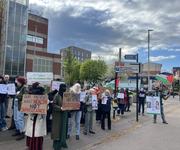 UK: Amnesty backs MPs' call to terminate NHS England's contract with Palantir – and demands Government must act now
Amnesty responds to the cross-party House of Commons Science, Innovation and Technology Committee concluding the government should terminate NHS England's contract with Palantir, citing the company "supporting highly controversial policies and activities".
03 Jun 2026 Press release -
 UK: Statement on political commentary after the tragic murder of Henry Nowak
Amnesty International UK's response to the political commentary that has followed the tragic murder of Henry Nowak
02 Jun 2026 Press release -
 Northern Ireland: Martin O'Hagan Family 'fobbed off' as police ombudsman blocks publication of murder report
Amnesty International reacts to the police ombudsman blocking the report into the murder investigation of journalist Martin O'Hagan.
01 Jun 2026 Press release -
 Russia: Children are being monitored and indoctrinated in Russian classrooms – new report
Amnesty International's new report finds that children across Russia and Russian-occupied Ukraine are being indoctrinated by propaganda-filled textbooks and lectures set out in a centrally controlled curriculum.
01 Jun 2026 -
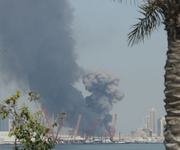 Gulf states arrest over 1,000 and strip citizenship for online war posts to 'protect their glossy image'
Amnesty International responds to Gulf state authorities having arrested more than 1,000 people in a sweeping crackdown on freedom of expression linked to the US-Israeli war.
01 Jun 2026 -
 UK: Milburn review has to be ‘wake-up call’ to stop young people falling into poverty
Our response to The Milburn Review’s interim findings on youth unemployment in the UK.
28 May 2026 Press release -
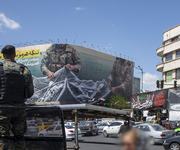 Tortured, disappeared, executed: How Iran is using war as a shield for systematic repression
Since the unlawful military attack launched by the USA and Israel against Iran on 28 February 2026, Iranian authorities have arbitrarily arrested more than 6,000 people
28 May 2026 Press release -
 Powerful exhibit in London documents Myanmar military’s attempt to crush a protest movement
Powerful exhibit in London documents Myanmar military’s attempt to crush a protest movement
21 May 2026 Press release -
 UK: Council of Europe's political declaration on the ECHR "weakens protections for refugees and migrants"
Amnesty International statement on the Council of Europe's political declaration on the ECHR
21 May 2026 Press release -
 UK: Unite the Kingdom rally "brings racism, violence and fear to the streets of London"
Amnesty International statement on Unite the Kingdom rally
21 May 2026 Press release -
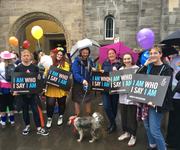 UK: Anti trans organisations exerting powerful influence over media and politics, new analysis reveals
Amnesty’s analysis exposes scale of anti-trans influence in UK media and maps rapid rise of anti-trans organisations
21 May 2026 Press release -
 Scotland: Political leaders must reject division and focus on delivering human rights
In the wake of the 2026 Scottish Parliament election, we call on party leaders to champion human rights for all to combat divisive rhetoric in Scotland.
20 May 2026 Press release -
 Northern Ireland: Racist hate crimes at record high, new PSNI figures show
Racist violence is “spiralling out of control” in Northern Ireland after new police figures revealed record levels of racist hate crime.
15 May 2026 Press release


