Latest
Latest news, commentary, and analysis from Amnesty International UK.
Showing 1783 articles
-
 Our leaders need to find the courage to stand up for refugees
Read about why the UK leadership's hostility towards refugees needs to change to address issues like social deprivation and injustice and make the world a safer place for everyone on World Refugee Day 2026
19 Jun 2026 Blog post -
 Iran: Deadly drone strikes on Bahrain and Saudi Arabia should be investigated as war crimes – new research
Deadly drone strikes on Bahrain and Saudi Arabia should be investigated as war crimes said Amnesty International in latest research report.
18 Jun 2026 Press release -
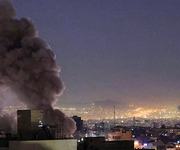 US-Iran deal risks becoming 'a shield behind which impunity continues', Amnesty warns
Amnesty is calling for all violations of international humanitarian law, including possible war crimes, to be independently investigated; for those responsible to be held to account; and for victims across the region to receive justice and reparations.
18 Jun 2026 Press release -
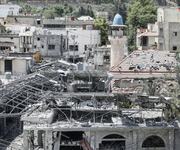 Lebanon: Israel radically expands unlawful mass 'evacuation' orders in war crime of unlawful transfer
This research is the first in a series of investigations examining violations of international law during the 2026 escalation in Lebanon.
17 Jun 2026 Press release -
 Amnesty criticises UK government’s ‘gimmick’ response to the 'Great Israeli Real Estate Event'
Amnesty has rejected the UK Government's weak response to the 'Great Israeli Real Estate Event'- an event that enables war crimes and crimes against humanity
16 Jun 2026 Press release -
 Georgia: A ‘cautionary tale’ of how state institutions can become tools of repression
Georgia’s experience over the last 3 years is a cautionary tale of how governments can turn state institutions into tools of repression to entrench their power
15 Jun 2026 Press release -
 UK: A 'shameful chapter in our history' - Amnesty responds to today's ruling on the proscription of Palestine Action
Tom Southerden, Amnesty International UK's Legal Programme Director responds to today's ruling on the proscription of Palestine Action.
15 Jun 2026 Press release -
 Northern Ireland has a racism problem, not an immigration problem - Belfast rally
Speaking in advance of an anti-racism rally today, Patrick Corrigan from Amnesty International UK said the recent attacks in Northern Ireland were part of a worsening pattern of organised racist violence.
15 Jun 2026 Press release -
 UK: Social media ban for under-16s 'right diagnosis, wrong prescription'15 Jun 2026 Press release
 -
UK: Terrorist sentence for Palestine Action activist marks 'dangerous' move against right to protest
Amnesty International comment on Palestine Action activists being sentenced as terrorists
13 Jun 2026 Press release -
 UK: Stop the 'Great Israeli Real Estate Event' - Israel is ethnically cleansing Palestinians while stolen land is being sold in London
The UK cannot condemn settlements with one hand while allowing them to be openly marketed here with the other
12 Jun 2026 Press release -
 UK: Palestine Action activists sentencing hearing risks ‘new low’ in crackdown against protest
Amnesty UK's response ahead of the sentencing hearing of the four activists connected with Palestine Action, following convictions arising out of their involvement in direct action at the Elbit Systems factory in Filton.
12 Jun 2026 -
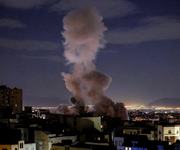 UK: Starmer must ‘draw red lines’ around UK airbases as ceasefire between the US and Iran breaks down
Responding to the second day of strikes and the threat of more as the tenuous ceasefire between the USA and Iran breaks down, Kristyan Benedict, Amnesty International UK's Crisis Response Manager, said: “Without end in sight, the UK should be doing everything in its power to protect civilians and the foundations of international law"
11 Jun 2026 -
Northern Ireland: Racist violence in Belfast a 'disgrace' stoked from afar
Responding to the racist violence that took place in Belfast last night, Patrick Corrigan, Northern Ireland Programme Director at Amnesty International UK, said: “This was racist violence on a shocking scale. It did not emerge in a vacuum. The flames that burned last night were fuelled by those who sought to blame entire communities for the actions of an individual"
10 Jun 2026 Press release -
 Erasing anything Palestinian: Israel’s ethnic cleansing campaign in the West Bank demands global action – new report
Ethnic cleansing campaign is Israeli state-led, and state-sponsored, not driven by rogue settlers or so-called extremist ministers
10 Jun 2026 Press release -
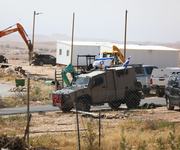 UK sanctions on Israeli settler networks ‘not meaningful accountability – the architects go untouched’
If Ministers are serious about sanctioning those 'who support and sponsor violence against Palestinian communities in the West Bank', they must act on the reality that settlements and settler violence are state policy – directed and funded from the top.
09 Jun 2026 Press release -
 Northern Ireland: Amnesty warns against racist backlash after north Belfast knife attack
The actions of one individual must never be used to stigmatise an entire community, nationality or faith group
09 Jun 2026 Press release -
UK: Amnesty condemns 'Great Israeli Real Estate Event' promoting illegal settlement property sales in London
Amnesty International UK has condemned a real estate event scheduled to take place in London on Sunday 14 June that openly advertises the sale of land in Israeli settlements in the occupied West Bank, calling on the UK government to take immediate action to prevent it from going ahead.
07 Jun 2026 Press release -
 Northern Ireland race relations framework ‘not fit for purpose’, warns Amnesty International
‘In the face of rising racist violence, the Executive Office has responded with a strategy even weaker than the failed 2015-25 plan it is supposed to replace’
04 Jun 2026 Press release -
 Greece: Peaceful protestors and journalists injured by dangerous police tactics
Amnesty International's new report, Protests are not battlefields: Patterns of unlawful use of force by police and impunity in Greece, finds that Greek police frequently use unnecessary and excessive force against peaceful protesters and journalists resulting in serious physical and psychological injuries.
04 Jun 2026 Press release


