Latest
Latest news, commentary, and analysis from Amnesty International UK.
Showing 1824 articles
-
 UK: Supreme Court ruling on Bahrain spyware case sends a clear message against transnational repression
Dr Saeed Shehabi and Moosa Mohammed, both prominent Bahraini activists living in London, allege that their computers were infected with FinSpy, by agents acting on behalf of the Bahraini government in September 2011
27 Jul 2026 Press release -
 UK: Amnesty asserts "completely disproportionate to punish criminal damage as terrorism"
Amnesty International responds to reports that five Palestine Action activists face being sentenced as terrorists for damage to a branch of Barclays Bank
27 Jul 2026 Press release -
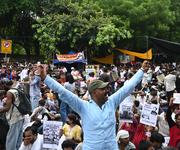 India: Invoking of extraordinary detention powers amid Delhi protests is an ‘affront to human rights’
This deeply concerning move is an affront to human rights that risks enflaming the situation in Delhi even further
24 Jul 2026 Press release -
 Northern Ireland: Amnesty response to judgment against MI5 and PSNI in journalist surveillance case
Amnesty International UK responds to the judgment from the Investigatory Powers Tribunal in the press freedom case brought by Vincent Kearney
23 Jul 2026 Press release -
 Fred: Threatened for refusing unsuitable work
Repeated threats of sanctions left Fred feeling dehumanised, unheard and humiliated
22 Jul 2026 -
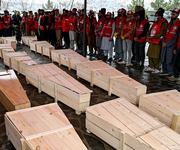 Pakistan's Kabul air strikes on drug rehab centre may amount to war crime - new investigation
Four months on, Pakistan has yet to explain deadly strike on Kabul rehab centre that killed at least 269, Amnesty finds
22 Jul 2026 Press release -
 Russia: Draft law could cut off Russian dissidents in Britain and abroad from banking and passports
This legislation is a chilling attempt to punish people who have left Russia but continue to criticise its authorities
21 Jul 2026 Press release -
 UK: Voters expect Burnham to go further on human rights, new Amnesty poll finds
New polling commissioned by Amnesty International suggests voters expect Andy Burnham to take a stronger approach to human rights than recent Prime Ministers
21 Jul 2026 Press release -
Egypt: Release dozens detained over Gen Z online group calling for political change
The Egyptian authorities must release dozens of people detained for their association with a Gen Z online group calling for political change
21 Jul 2026 Press release -
 India: Delhi police crackdown on peaceful protesters demanding exam justice must be investigated
The images and reports emerging from the protest at Jantar Mantar show how peaceful dissent is being suppressed in India.
20 Jul 2026 Press release -
 Dear Prime Minister, make the right to food and housing a reality
Our CEO, Kerry Moscogiuri, urges the new Prime Minister to put our rights to food and housing into law during his time at Number 10.
20 Jul 2026 Blog post -
 Myanmar: Reported sea tragedies highlight desperate choices facing Rohingya
Amnesty International responds to reports that over 500 people are feared dead after boats carrying mostly Rohingya refugees capsized off the coast of Myanmar
16 Jul 2026 Press release -
 The UK government must end its attack on jury trials
We unpack the negative impact of the UK government's proposed Courts and Tribunals Bill 2026 on your right to a fair trial and right to protest
15 Jul 2026 Blog post -
 Global: States must push back against reprehensible US campaign to dismantle the ICC
Amnesty UK has written to the Prime Minister urging the Government to take concrete action to defend the International Criminal Court
14 Jul 2026 Press release -
 Northern Ireland: Burning mosque effigy a ‘shameful display of hatred’
We condemn the burning of an effigy of a mosque on top of a bonfire in Moygashel, Co. Tyrone and praise the PSNI's proactive response.
10 Jul 2026 Press release -
UK: Amnesty response to Burnham's Gaza admission – recognition ‘a vital first step’, but action must follow
Amnesty International responds to Andy Burnham saying Labour "didn't get it right" in its initial response to Israel's military action in Gaza
09 Jul 2026 Press release -
 Saudi Arabia: Filipino domestic workers ‘entering a lottery’ of abuse and exploitation in Saudi Arabia – new report
Amnesty has released a new briefing which reveals that Filipino women are being overworked, exploited and subjected to degrading treatment in Saudi Arabia
09 Jul 2026 Press release -
 A View from Amnesty: the Timms Review, poverty and the antidote to despair
Our CEO, Kerry Moscogiuri, shares her thoughts on the implications of the 2026 Timms Review of the UK's Personal Independence Payment (PIP).
09 Jul 2026 Blog post -
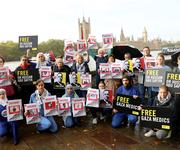 UK healthcare workers: Foreign Secretary must act ‘publicly and forcefully’ to save tortured Gaza colleague
804 doctors, nurses and medical professionals sign an open letter to Yvette Cooper demanding intervention in the case of detained Palestinian Dr Hussam Abu Safiya
09 Jul 2026 Press release -
UK: Timms Review must give disabled people the support they need – not ‘sticking plaster reform’
Amnesty International UK responds to the interim findings of the Timms report on the UK's personal independence payment (PIP)
09 Jul 2026 Press release


