All resources
Whether you're looking for something specific or just exploring, this space brings together resources from across the Knowledge Hub.
Search, filter and browse to find the resources you need.
Showing 17274 pages
-
 Our work in Parliament
This collection brings together briefings and submissions produced by Amnesty International UK to inform debate, influence legislation and support scrutiny of government policy.
Parliamentary briefing, Submission, Collection 08 Jun 2026 -
 Response to Home Office consultation on support for families and children facing removal
Response to Home Office consultation on support for families, children and care leavers facing removal
Submission 04 Jun 2026 -
 What really happened in the 1989 Tiananmen Square protests
The official line is that "nothing happened in Tinanmen Square". But pictures like the iconic Tank Man tell a different story: a story of human rights violations against peaceful protestors. On June 1989, protestors gathered in Beijing’s Tiananmen Square…
Explainer 03 Jun 2026 -
 Response to Northern Ireland Executive consultation on draft race relations framework
Read our response to the Northern Ireland Executive consultation on draft race relations framework.
Submission 03 Jun 2026 -
 Amnesty International UK membership forms
Are you thinking about taking the next step and joining Amnesty International UK to help protect human rights? This page has everything you need to get started. Support human rights by becoming a member today.
Activism resource 02 Jun 2026 -
 Amnesty International UK donation forms
Whether you’ve raised money through a fundraising activity, or are looking to make a personal donation, this page has everything you need to send your donation by post.
Fundraising resource 02 Jun 2026 -
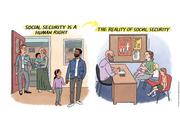 Everyday Rights: Right v Reality Illustrations, by Edith Pritchett
A series of informative posters by the artist Edith Pritchett that visualise the difference between the reality of everyday rights in the UK versus what our rights require them to be.
Poster, Resource pack 28 May 2026 -
 Response to Home Office consultation on use of force against children
Response to Home Office consultation on use of force against children.
Submission 28 May 2026 -
Immigration and Asylum Bill
This briefing provides information and analysis of the immigration bill that was announced in the King's Speech on 13 May 2026 and the government's intentions.
Policy briefing 28 May 2026 -
 Scottish Parliamentary Briefing: Priorities for the New Scottish Government
Amnesty International UK's policy recommendations for the new Scottish Government
Submission 27 May 2026 -
 Amnesty International UK Submission to the 2026 UK consultation “Growing up in the online world: a national conversation”
Amnesty International UK submission exploring social media risks for children and young people, and calling for ‘safety by design’ regulation to protect rights without limiting access.
Submission 26 May 2026 -
 Letter to the Scottish party leaders following the 2026 Parliament election
Following the outcome of the 2026 Scottish Parliament election, Amnesty International UK wrote to the leaders of each Scottish political party, urging them to put human rights at the heart of their work for Scotland over the next five years.
Submission 21 May 2026 -
 Like a snowball: the growth and impact of the gender critical movement in the UK
This report explores the growth of the gender critical movement in the UK, its influence on media narratives, and the impact on trans rights and public debate.
Executive summary, Reports and publications, Rights in Focus 20 May 2026 -
 Briefing: King's Speech
Amnesty International UK urges Parliamentarians to make interventions in support of Human Rights wherever possible after latest King's Speech.
Parliamentary briefing 13 May 2026 -
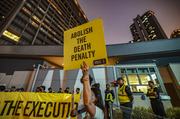 Death penalty report 2025
This report covers the judicial use of the death penalty for the period January to December 2025. In 2025, Amnesty International recorded the highest number of executions carried out globally since 1981.
Reports and publications 05 May 2026 -
 Response to Home Office consultation on creating a new appeals body
Response to Home Office consultation on a new appeals body.
Submission 04 May 2026 -
 Scottish Elections 2026: Party Manifestos Summary
Ahead of Scotland's 7 May 2026 Parliament election, we've compared party manifestos to see which parties' policies are most aligned with human rights. Read our summary here.
Explainer 30 Apr 2026 -
 Scotland 2026: Human Rights Manifesto – Access to Justice Briefing
Amnesty International UK's briefing on access to justice ahead of Scotland's 7 May 2026 Parliament election
Policy briefing 30 Apr 2026 -
 Research briefing: People in Iran face dual atrocity risks
This 16-page research briefing by Amnesty International documents and analyses the dual threats faced of repression by the Iranian authorities and military attacks by the US and Israel against civilians in Iran.
Reports and publications 29 Apr 2026 -
 Submission: Joint intervention to the Court of Appeal on Palestine Action
This document presents written legal submissions from Amnesty International UK and Liberty, arguing that the proscription of Palestine Action under counter-terrorism laws is disproportionate and violates human rights protections.
Submission 27 Apr 2026


